Science, lifestyle and moderation at the heart of European Parliament debate on wine and health
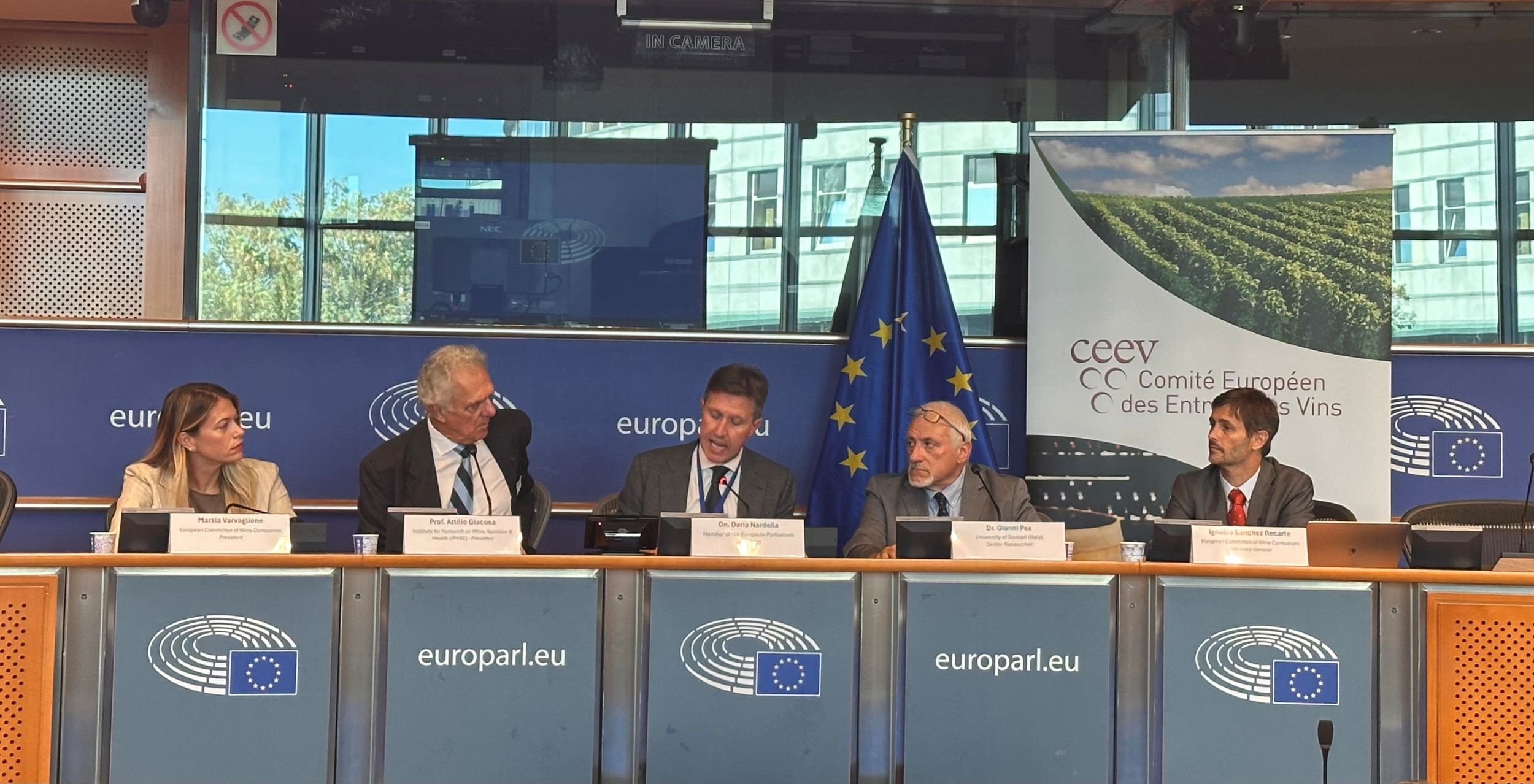
↓Brussels, 29 September 2026 – Scientists, policymakers and representatives of the European wine sector gathered at the European Parliament for the event “Health debates: Can wine be part of a healthy lifestyle?”, hosted by MEP Dario Nardella (S&D, Italy) and organised by the Comité Européen des Entreprises Vins (CEEV).
The discussion came as European and international institutions address cancer, cardiovascular diseases and other non-communicable diseases, and focused on the importance of grounding health policy in scientific evidence while considering wine within the broader context of diet, drinking patterns, social habits and lifestyle.
Closing the event, MEP Dario Nardella stressed the need to combine ambitious health prevention with evidence-based policymaking and recognition of Europe’s agricultural and cultural traditions:
“Protecting public health must remain one of our central political responsibilities. Effective prevention policies need to be grounded in science and recognise the complexity of people’s lifestyles, diets and behaviours. Wine is also a core part of Europe’s agricultural, economic and cultural heritage. Our responsibility is to listen to the scientific evidence, and build policies that protect citizens while recognising and safeguarding the realities of our territories its rural communities and our culture.” said MEP Dario Nardella.
The scientific discussion brought together Dr Gianni Pes, Senior Researcher at the University of Sassari and a pioneer of Blue Zones research, and Prof. Attilio Giacosa, gastroenterologist and President of the Istituto per la Ricerca su Vino, Alimentazione e Salute (IRVAS).
“The lesson of the Blue Zones is that there is no single secret to longevity. In Sardinia, exceptional longevity emerged within an entire way of life: daily physical activity, traditional food, strong family and community ties, social interaction and conviviality. Wine has traditionally been present in this lifestyle, generally consumed moderately and with food, but it is one element within a much broader pattern. While the relationship between wine and health remains scientifically complex and debated, it should be considered within this broader pattern of diet, social life and lifestyle.” said Dr Gianni Pes.
Prof. Giacosa underlined that “Science requires us to deal with complexity rather than reduce the discussion to simplified approaches. Alcohol abuse is unquestionably harmful, and there are people and circumstances in which alcohol should not be consumed at all. At the same time, scientific research needs to examine dose, drinking patterns, consumption with meals and the overall dietary and lifestyle context. Our role as scientists is to ensure that public information and policy reflect the evidence in all its complexity”.
Opening the event, Marzia Varvaglione, President of CEEV, explained that “We recognise the risks associated with harmful alcohol consumption and believe strongly in moderation, education and informed choices. European policies should be based on evidence and recognise the difference between harmful patterns of consumption and wine consumed moderately within a balanced lifestyle. Our ambition is not to tell people to drink, but to preserve a culture in which adults who choose to enjoy wine can do so consciously and responsibly.”
The debate also explored lessons from the world’s Blue Zones, including Sardinia, Ikaria and Nicoya, where research into longevity considers the combined influence of diet, movement, environment and social relationships.
“The event reinforced the importance of maintaining an open dialogue between science and policymaking as Europe develops its approach to cancer, cardiovascular diseases and other NCDs. We need a whole-of-society approach and all actors, including stakeholders, should meet around the same table, with science, responsibility and education at the centre,” concluded Ignacio Sánchez Recarte, CEEV Secretary General.
DOWNLOAD
NOTE TO EDITORS
- Comité Européen des Entreprises Vins (CEEV) represents the European Union wine, aromatised wine and vinegar companies. It brings together 24 national associations and 2 sectoral ones, from 13 EU Member States, plus Switzerland, the United Kingdom and Ukraine, and a consortium of 4 leading European wine companies. CEEV members produce and market the vast majority of quality European wines, with and without a geographical indication, and account for over 90% of European wine exports.
- Media contact: Dr Ignacio Sánchez Recarte, CEEV Secretary General, [email protected], Mobile: +32 (0)476 88 36 75